 Alien Invasives
Belhambra (Phytolacca dioica)
04 October 2016
- Other names
-
Monkey Grape, Ombu, Poke Berry, Umbra Tree (English)
Belambraboom, Dikboom, Bobbejaandruifboom (Afrikaans)
uMzimuka (isiZulu) - Invasive status
-
NEMBA Category 3
CARA 2002 Category 3 - Description
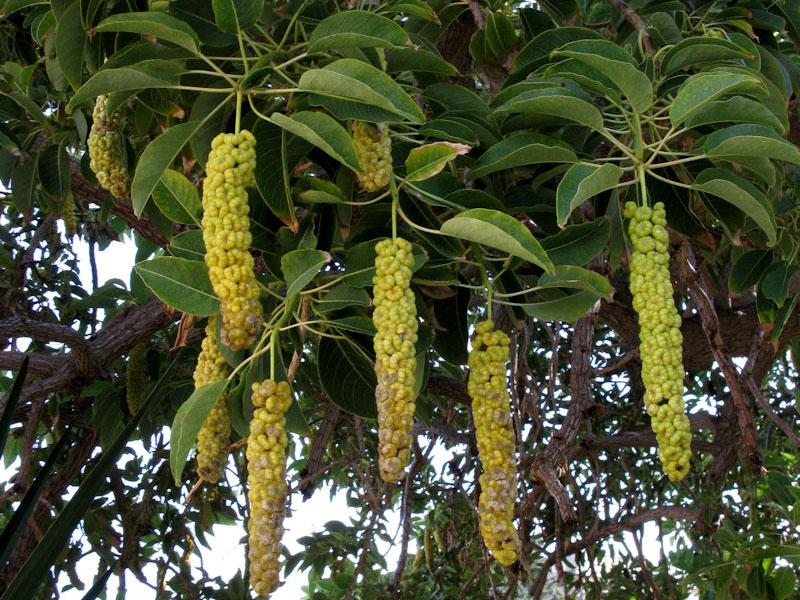
- This large, soft-wooded, semi-evergreen tree can grow up to 20 metres tall with an impressive buttressed trunk. The leaves and stems are succulent. It has bright green leaves, oval-shaped leaves with smooth margins. Creamy-yellow flowers appear from September to December in 10cm long clusters with male and female flowers appearing on separate trees from . The berry-like fruits start off green then turn black.
- Originally from
- South America (northern Argentina, southern Brazil, Paraguay and Uruguay)
- Where is it a problem?
- Western Cape, Eastern Cape, KwaZulu-Natal and Gauteng provinces
- How does it spread?
- Seed dispersal
- Why is it a problem?
- It competes with indigenous speciesand because of its enourmous size, even a single tree can seriously affect a natural ecosystem. In urban areas seedlings often germinate along fencelines or walls and can cause considerable damage to property if they are allowed to grow to tree size.
- Planting alternatives
- White Stinkwood (Celtis africana)
- Uses
- Ornamental shade tree
Please help...
Any donations would be greatly appreciated and are much needed to support these efforts. Please consider setting up a stop order with your bank for a regular monthly contribution rather than (or in addition to) a one-off donation. This would greatly assist us in budgeting and planning for the future.
Please EFT to the following account:
| Bank: | Nedbank |
| Branch name: Branch code: |
Morning Glen Branch 198 765 |
| Account Name: | Sandspruit Ullmann Park Association |
| Account Number: | 1014 852 641 |
| Reference: | Your name |
Any questions? Please contact us by clicking here.